Description
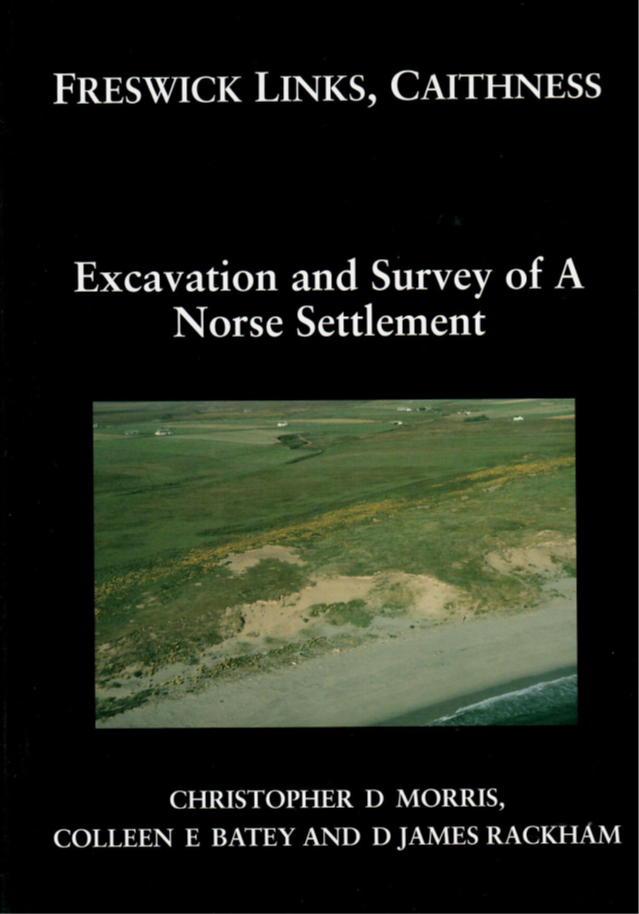
Freswick has been identified with ‘Thrasvick’ of the Orkneyinga Saga.
‘Rescue’ excavations and associated surveys took place over five seasons from 1980-4 at Freswick Links. This report concerns these surveys and ten cliff-side excavation trenches designed to examine the nature of the extensive midden deposits identified by environmental survey in 1979. The trenches give an inside into the nature of rubbish deposits near the buildings of the important mainland Scottish Late Norse site. Environmental samples were taken on a large scale for micro-analysis. The resulting report is one of the first detailed studies of middens on a rural British site related to the Scandinavian settlements in the British Isles: it considers macro-plant, carbonized seed, land snail, marine molluscan, eggshell, avian and mammalian data, together with the particularly abundant and rich fish evidence. Pre-Viking deposits, including cultivation horizons, were also examined and pollen analyses undertaken in association with this project are also presented here. Three inland areas were examined: one to locate a broch examined at the turn of the last century and to assess the degree of survival of intact deposits, and two on eroding surface sites. An account is given of the range of artefacts which amplifies the picture gained from reassessment of past collections and the recent erosion survey of Freswick Links. A particular study is made of the distinctive dung-tempered pottery. This modern work re-establishes the outstanding importance of the site – the first Norse site to be identified on the mainland of Scotland – and puts it into the wider context of the Norse archaeology of the North Atlantic region.
This major study will be of interest and value to scholars and students of the Viking and Late Norse periods and also to environmental archaeologists concerned with the interactions of people with their local environments at a period of time when Viking settlers were making a major impact upon a much wider world.